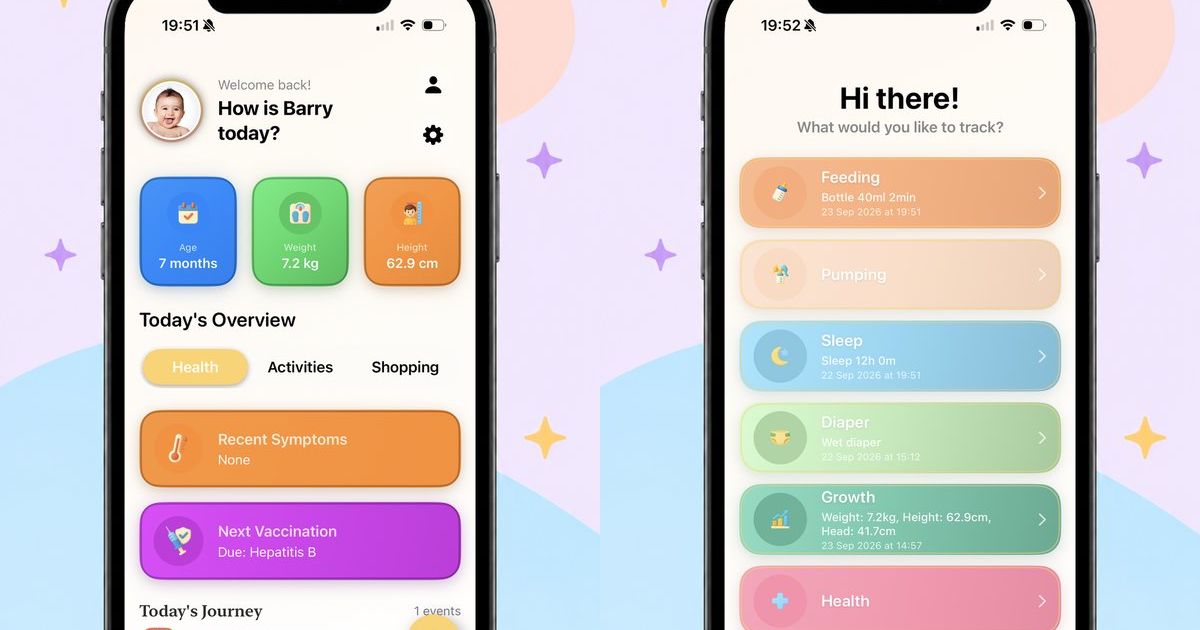
Building Modern Mobile Applications
Discover the technology stack and development process behind Tiny Tot Tracker and Anchor Wellbeing...
Read Article
Mobile app development news, Microsoft Azure tips, Office 365 guides, and technology insights from the Syncrasoft team.
Discover the technology stack and development process behind Tiny Tot Tracker and Anchor Wellbeing...
Read Article
Six habits for running a growing business, from knowing your numbers to protecting your time...
Read Article
Key development stages, what's worth tracking, and when to seek advice...
Read Article
Power Automate, Teams Phone, SharePoint, Defender and Copilot: five features many firms pay for and never switch on...
Read Article
Cloud migration doesn't have to be complicated. A practical guide for UK small and medium businesses considering Azure...
Read Article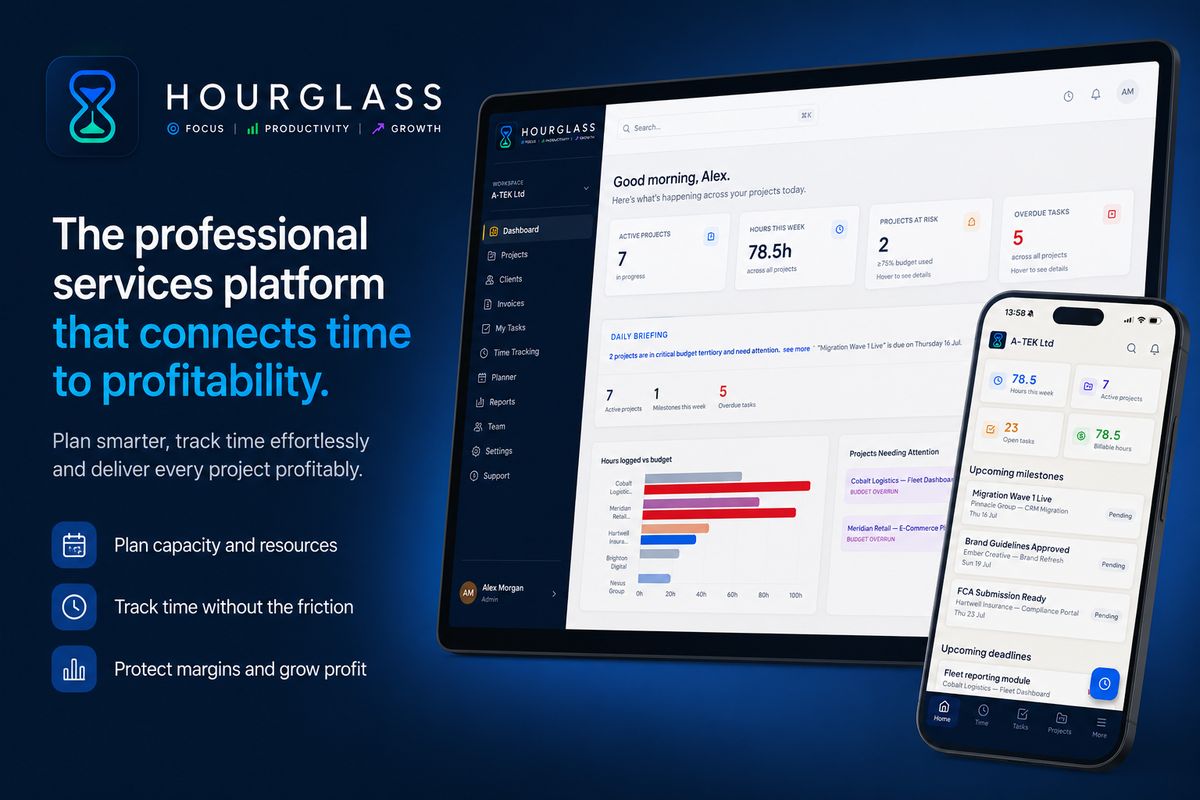
How professional services teams are using Hourglass to eliminate time waste, improve project visibility, and drive profitability with AI-powered delivery intelligence...
Read Article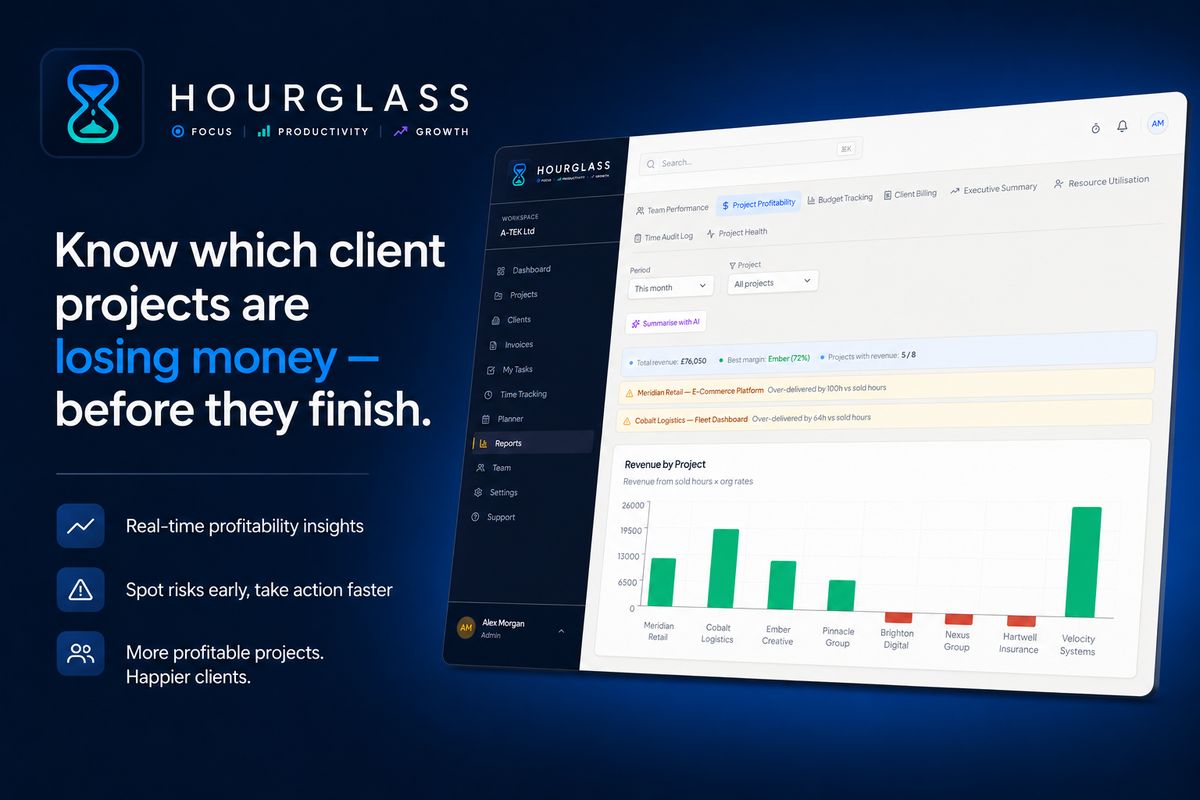
Most professional services firms don't discover project losses until the invoice is sent. How to see profitability in real time and act before the damage is done...
Read Article
Running a UK agency without real-time profit data means discovering margin losses long after you can do anything about them. What project profitability software does differently...
Read Article
What billable utilisation is, why spreadsheets can't track it, and how to set realistic targets...
Read Article
A practical step-by-step framework for measuring project margin as work happens, not after the damage is done. Written for UK consultancy principals, finance leads, and operations managers...
Read Article
Enterprise PSA tools are built for large firms with big budgets and dedicated administrators. What small UK agencies need from PSA software, and how to compare the options without getting burned...
Read Article
Without a clear picture of who is working on what and when capacity is available, professional services firms end up overloaded, under-margin, and reactive. Resource planning software fixes that...
Read Article